Mastering the Art of a Balanced Wedding Seating Chart
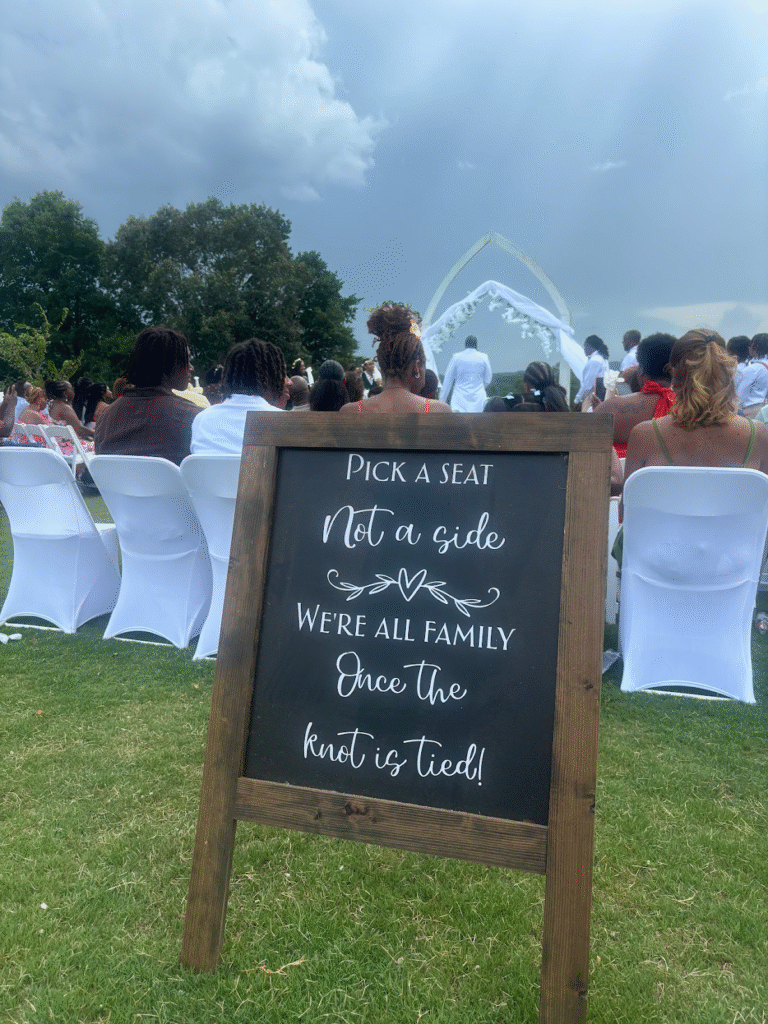
Photo by Love and Light Wedding Planning
Seating charts can feel like a painful puzzle. You are balancing family dynamics, friend groups, and guest preferences all at once. It can definitely be challenging, but with the right approach, you can create a seating chart that keeps most guests happy. Most importantly, though, create one that keeps you sane. Here’s how to do it.
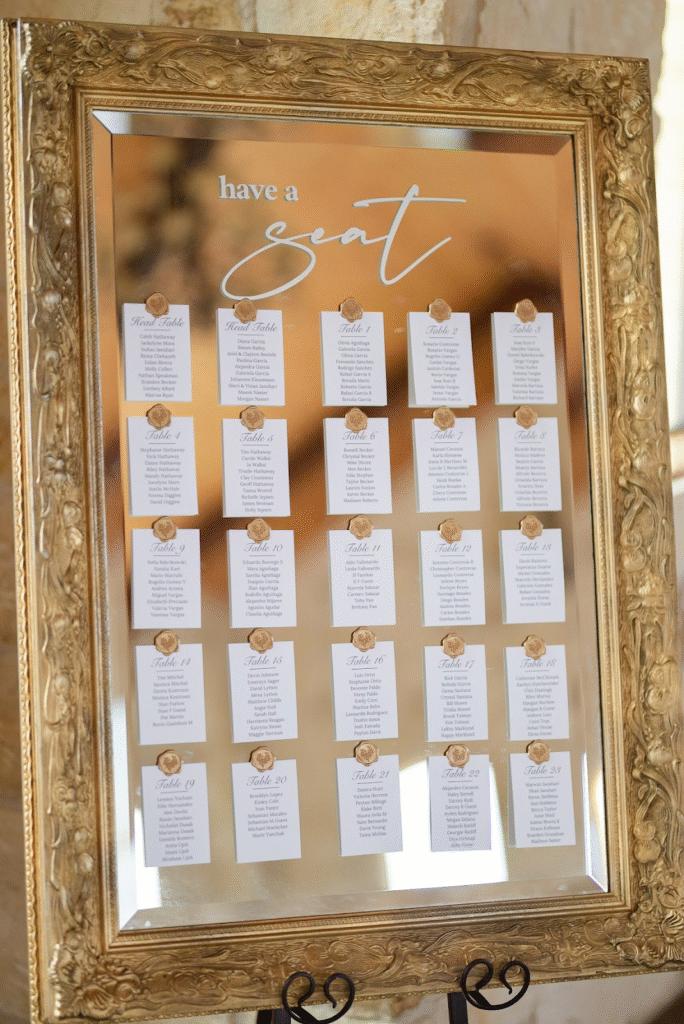
Photo by Pictures by Ariel
- Understand Your Venue’s Floor Plan
Before diving into who sits where, it’s important to understand your venue’s floor plan. Venue layouts can vary drastically in shape and size, and some spaces may have limitations like columns in the middle of the room or areas that can’t be used. Your venue or vendors will also provide tables in different shapes and sizes, so you’ll need to confirm that each table fits comfortably in the space with chairs around it, and how many guests can be seated at each one. Having a clear understanding of the floor layout will make it much easier to arrange tables and create a seating plan that flows smoothly for your guests.
- Use a Seating Chart Tool to Simplify the Process
There are several apps available (such as Prismm) that can make the seating chart process much easier. Some of these tools even have your venue’s layout already built into their system, allowing you to add tables and furniture to adjust to the space as needed. Digital tools make it simple to move things around and can save you a lot of time compared to creating a seating chart by hand. That said, if you prefer an old-school approach, try using sticky notes or clothespins that can be moved easily. This way, you won’t have to recreate the entire seating chart every time something changes.
- Give Your VIPs Get the Best Seats
Your VIPs include your closest family members, wedding party, and any special guests you feel deserve the best seating at the wedding. Whether you choose a sweetheart table or an estate table, it’s common to seat your immediate family or wedding party closest to you. From there, many couples place extended family members or close friends (especially those who didn’t make the wedding party) at nearby tables so they’re still part of the inner circle.
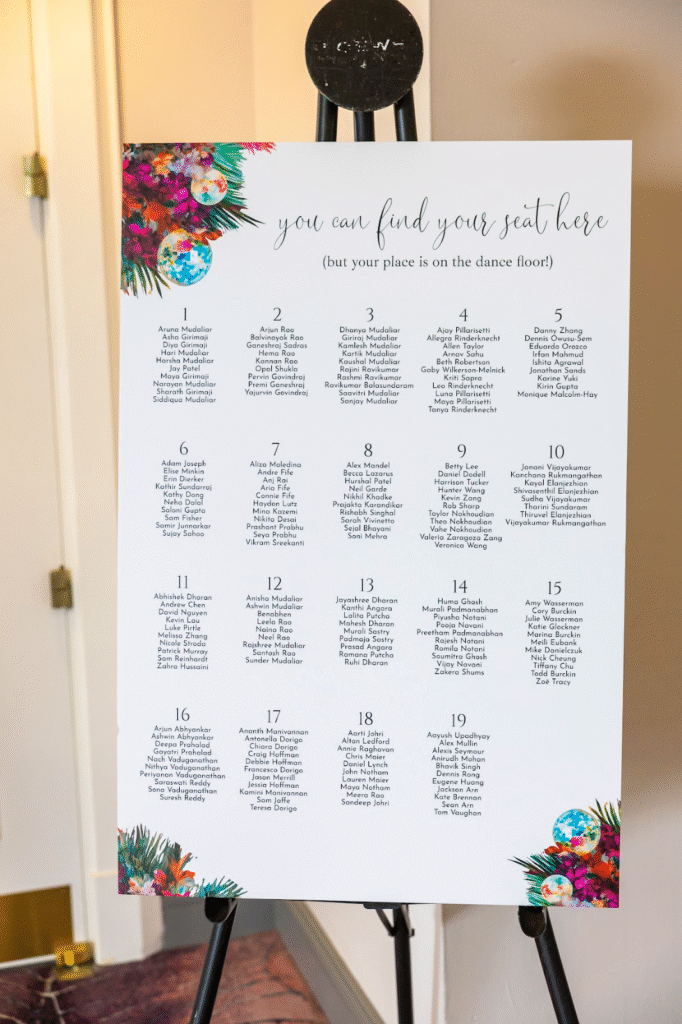
Photo by BeStudios
- Organize Your Guest List by Groups
Start by organizing your guest list. Begin with broad groups such as family, friend groups, coworkers, and so on. This helps you see who naturally belongs together. At this stage, simply list everyone out without worrying about assigning specific tables yet. Do, however, keep couples and immediate family members together. Once your groups are organized, you can begin placing guests at tables in groups of 6, 8, or 10, depending on your table sizes. It’s perfectly okay to adjust the numbers to odd numbers. 6, 8, and 10 guests per table are just common maximums, not strict rules.
- Consider Relationships Between Guests
Here’s where it gets a little trickier. Start thinking about the relationships between your guests. (you’ve already begun this by grouping them). Now picture them actually sitting around a table. Do they all get along, or is there any lingering tension? While it’s great to seat best friends together, it’s even more important to avoid potential drama. Separating guests who don’t mix well can make a big difference. A well-balanced table keeps everyone comfortable, happy, and engaged.
- Make It Easy for Guests to Find Their Seats
Once your seating chart is finalized, you’ll need a clear and easy way for guests to find their seats. For smaller weddings, escort cards or a simple seating chart work well. For mid-size weddings, a large, clearly displayed chart is especially helpful. For large weddings (like many South Asian celebrations) a QR code seating chart allows guests to quickly search their name and table number may be the best option. This is personally one of my favorites because it’s intuitive and minimizes confusion. No matter which option you choose, make sure the seating display is accessible, easy to read, and simple for guests to navigate.

Photo by Love and Light Wedding Planning
- Plan for Last-Minute Changes
Even with careful planning, last-minute changes are almost inevitable. Sometimes a guest can no longer attend, and other times guests may rearrange themselves (something that tends to happen often at South Asian weddings). As long as your VIPs remain seated close to you and general guest groups stay within the same area, a few seat swaps usually won’t cause major issues. For last-minute changes, you may end up with an extra open seat or need to add a chair to a table that isn’t already at capacity. To allow flexibility, plan to finalize your seating chart just one to two weeks before the wedding, giving yourself enough time to make adjustments without unnecessary stress.
Creating a seating chart might seem hard, but you can absolutely do it. Compared to the rest of your wedding planning, this may actually be one of the easier tasks. Take it step by step, think it through (but not too hard!) You won’t be able to please everyone, and that’s okay. What matters most is that you’ve put your best foot forward and created a plan that works for you and your day.


PLEASE COMMENT BELOW